The Passion Of The Christ
Reviewed by Rich Drees
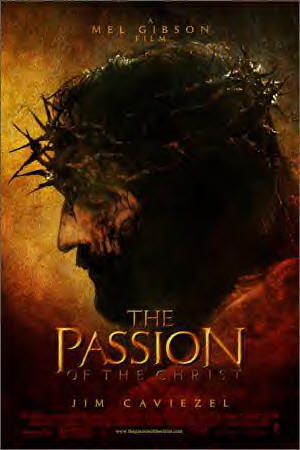 The Bible has been a source of stories for filmmakers since the beginning of
the cinema. However, in the past few decades, studios have shied away from
religiously themed material and those films that due take on the subject of
religion, such as Martin Scorsese’s Last Temptation Of Christ or
Kevin Smith’s Dogma, have been met with a swirl of controversy that
the films may or may not have been merited. The release of Mel Gibson’s
The Passion Of The Christ is no exception, having angered some who decry
the film as anti-Semitic while others have praised it as inspirational. But
if you were to leave your religion at the door, does The Passion hold
up as a film? Unfortunately, I would have to say that Gibson stumbles.
The Bible has been a source of stories for filmmakers since the beginning of
the cinema. However, in the past few decades, studios have shied away from
religiously themed material and those films that due take on the subject of
religion, such as Martin Scorsese’s Last Temptation Of Christ or
Kevin Smith’s Dogma, have been met with a swirl of controversy that
the films may or may not have been merited. The release of Mel Gibson’s
The Passion Of The Christ is no exception, having angered some who decry
the film as anti-Semitic while others have praised it as inspirational. But
if you were to leave your religion at the door, does The Passion hold
up as a film? Unfortunately, I would have to say that Gibson stumbles.
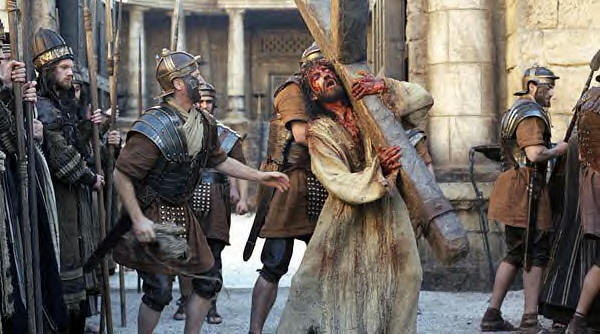
However, there’s no denying that director Mel Gibson’s The Passion Of The Christ is a brutal film. The Biblical accounts of the final 12 hours of Jesus of Nazareth’s life are fairly explicit as to the beating and execution that he suffered at the hands of the Romans. However, Gibson seems to wallow in the violence, forcing our noses into it. Visually the film is gorgeous, stunningly shot. However, here Gibson undermines the beauty of the cinematography by relying on such visual trickery as slow motion shots to often as emphasis.
Some people may have qualms with Gibson’s interpretation of some of the material. The Passion’s version of Pontius Pilate is much more wishy-washy than the historical accounts report. Also, according to the four Gospels of the New Testament, there is no mention of Satan or his agents lurking in the Garden of Gethsemane tempting Jesus to turn away. (Though there is mention in The Gospel Of Luke that an angel appeared to strengthen Jesus, this does not happen in the film.)
 The thing that hurts the film most though, is the lack of context that these
events have in Jesus’ life. While it reasonable to expect that a majority of
this film’s audience will be familiar the story of His life, no film should
presume that the audience has much previous knowledge of its story. In 1939,
Margaret Mitchell’s Gone With The Wind was one of the most widely
read books in the country, but the film adaptation did not start with the
“Burning Of Atlanta” sequence. The Passion contains only the briefest
of flashbacks to Jesus’ arrival in Jerusalem on Palm Sunday and to the Last
Supper, but these are not enough to give a full picture of the character and
teaching of Jesus. The only real indication of Jesus’ teachings actually
comes from the accusations made by the temple priests during Jesus’ trial,
though even a viewer with no foreknowledge of the story could safely assume
that they were probably lying.
The thing that hurts the film most though, is the lack of context that these
events have in Jesus’ life. While it reasonable to expect that a majority of
this film’s audience will be familiar the story of His life, no film should
presume that the audience has much previous knowledge of its story. In 1939,
Margaret Mitchell’s Gone With The Wind was one of the most widely
read books in the country, but the film adaptation did not start with the
“Burning Of Atlanta” sequence. The Passion contains only the briefest
of flashbacks to Jesus’ arrival in Jerusalem on Palm Sunday and to the Last
Supper, but these are not enough to give a full picture of the character and
teaching of Jesus. The only real indication of Jesus’ teachings actually
comes from the accusations made by the temple priests during Jesus’ trial,
though even a viewer with no foreknowledge of the story could safely assume
that they were probably lying.
Much has been written about Mel Gibson’s religious upbringing and whether this film portrays the Jews as the ones who killed Jesus. While it was the high priests of temple, who of course were Jewish, that prompted the arrest and ultimate execution of Jesus, the film doesn’t come right out and attempt to blame all Jews for this. It also, doesn’t try too hard to separate the Jewish commoners from the machinations of the high priests. Ultimate, whether a viewer will find the film anti-Semitic will depend on their own prejudices they bring to a viewing of the film.