|
Universal Proposes New Home For Bates Motel By Rich Drees
The redevelopment plan will turn 50 hectares of the studio’s backlot into townhouses, apartments and lofts to be called Universal Village. An additional 15 hectares of hiking trails and parks are planned. Universal is planning on spending close to $3 billion for a complex that will comprise approximately 2900 homes. The development will create 11,000 jobs and is estimated to bring the studio more than $4 billion in annual revenue throughout Los Angeles county.
"This is a blockbuster, a transformative project, a city-making project, and it will ensure Los Angeles remains the entertainment capital of the world,” states Los Angeles Mayor Antonio Villaraigosa. "With a housing crisis, traffic congestion and an ever-growing population, this is the face of smart, responsible, environmentally-friendly development for the future."
The first step in the development plan involves moving the Psycho sets as well as the disaster set from Steven Spielberg’s War Of The Worlds, Colonial Street, European Street and other popular attractions on the Universal Studios tour.
The plan also calls for an expansion of Universal’s production facilities and office space and a “refreshed” Universal CityWalk and Universal Studios Hollywood theme park.
Universal City was founded in 1915 by the studio founder, Carl Laemmle and is an unincorporated city. However, since Universal City resides within both the city and county of Los Angeles, NBC Universal must file building applications with both jurisdictions, which would then be subject to a public review and hearing process. It is this process that has stopped previous plans by Universal to develop the property. A coalition of some 40 area homeowners associations called the Hillside Association have already voiced concerns over the proposal. |
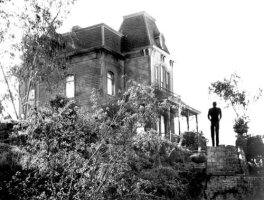 December 9, 2006- The iconic Bates Motel and the spooky house
overlooking it from Alfred Hitchcock’s classic Psycho (1960)
are set to be moved from their long standing location on the Universal
Studios lot as part of a plan by the studio to redevelopment much of
their backlot.
December 9, 2006- The iconic Bates Motel and the spooky house
overlooking it from Alfred Hitchcock’s classic Psycho (1960)
are set to be moved from their long standing location on the Universal
Studios lot as part of a plan by the studio to redevelopment much of
their backlot.